NSPIRE Standard: Bathtub and Shower (V3.0)

Bathtub and Shower Inspection Procedure

This guide outlines the inspection requirements and detailed process for evaluating bathtub and shower fixtures, ensuring compliance with safety, hygiene, and privacy standards for residential properties.

Download NSPIRE Standard PDF

Professional bathroom showing bathtub and shower fixture
Loading...

What This Standard Is About

Bathtubs and showers are essential fixtures for personal hygiene and daily living. This standard ensures these fixtures work properly, have all necessary components, and can be used safely and privately. Think of it as making sure residents can take a proper shower or bath whenever they need to, without any problems.

Where to Inspect

Bathtubs and showers are checked in Unit bathrooms (inside individual apartments or homes) and Inside bathrooms (common area bathrooms shared by residents). These fixtures are never inspected in outside areas.

What You're Looking For

The inspector checks if bathtubs and showers are:

  • Operable - Do they turn on and provide water?
  • Draining properly - Does water flow out when it should?
  • Complete - Are all parts present (handles, faucets, etc.)?
  • Not damaged - Are components in good condition?
  • Private - Can they be used without being seen from outside or adjacent areas?

How to Perform an Inspection

// The inspection involves testing functionality, checking components, and verifying privacy
Step 1: Identify Location and Count Fixtures
First, determine if you're inspecting a Unit bathroom or Inside (common area) bathroom.
Count how many bathtubs or showers are present in that location.
→ This determines which deficiency path to follow
Step 2: Test Water Supply and Operation
For each bathtub or shower, test the water supply:
  • Engage the handle or knob to turn on water
  • Verify water flows from the fixture
  • Turn off the water supply
  • Check if water drains properly
⚠️ If stopper is engaged, ask resident or POA to release it before testing drainage
Step 3: Inspect Components for Damage
Visually inspect all components for damage, missing parts, or inoperability:
  • Faucets, handles, and knobs
  • Shower head and diverter valve
  • Tub, shower pan, and drain
  • Enclosure, glass door, or curtain
→ Determine if damage limits the resident's ability to maintain personal hygiene
Step 4: Verify Privacy
Check if the bathtub or shower can be used in private.
⚠️ Problem: If someone can be observed from adjacent areas or the exterior while using it, that's a deficiency

What Happens If There's a Problem?

// Different deficiencies apply based on location (Unit vs Inside) and number of fixtures
Deficiency 1: Only One Fixture, Inoperable or No Drain
Only one bathtub or shower exists and it doesn't work or won't drain.
Unit Location:Severe24 hoursHCV Fail
Inside Location:Low60 daysHCV Pass
Deficiency 2: One Fixture Broken, Another Works
One bathtub or shower is inoperable or won't drain, but at least one other fixture in the same location is operational.
Unit Location:Moderate30 daysHCV Fail
Inside Location:Low60 daysHCV Pass
Deficiency 3: Component Limits Hygiene
A component is damaged, inoperable, or missing and it may limit the resident's ability to maintain personal hygiene.
Unit Location:Moderate30 daysHCV Fail
Inside Location:Low60 daysHCV Pass
Deficiency 4: Component Doesn't Limit Hygiene
A component is damaged, inoperable, or missing but it does not limit the resident's ability to maintain personal hygiene.
Unit or Inside:Low60 daysHCV Pass
→ Examples: broken stopper, missing curtain, minor discoloration
Deficiency 5: Privacy Violation
The bathtub or shower cannot be used in private - someone could be observed from adjacent areas or the exterior.
Unit or Inside:Moderate30 daysHCV Fail
→ Examples: missing curtain, window without covering, visible from parking area
Key Point:
The severity and HCV status differ significantly between Unit and Inside locations. Unit deficiencies are generally more severe because they directly impact a resident's primary living space and ability to maintain hygiene.
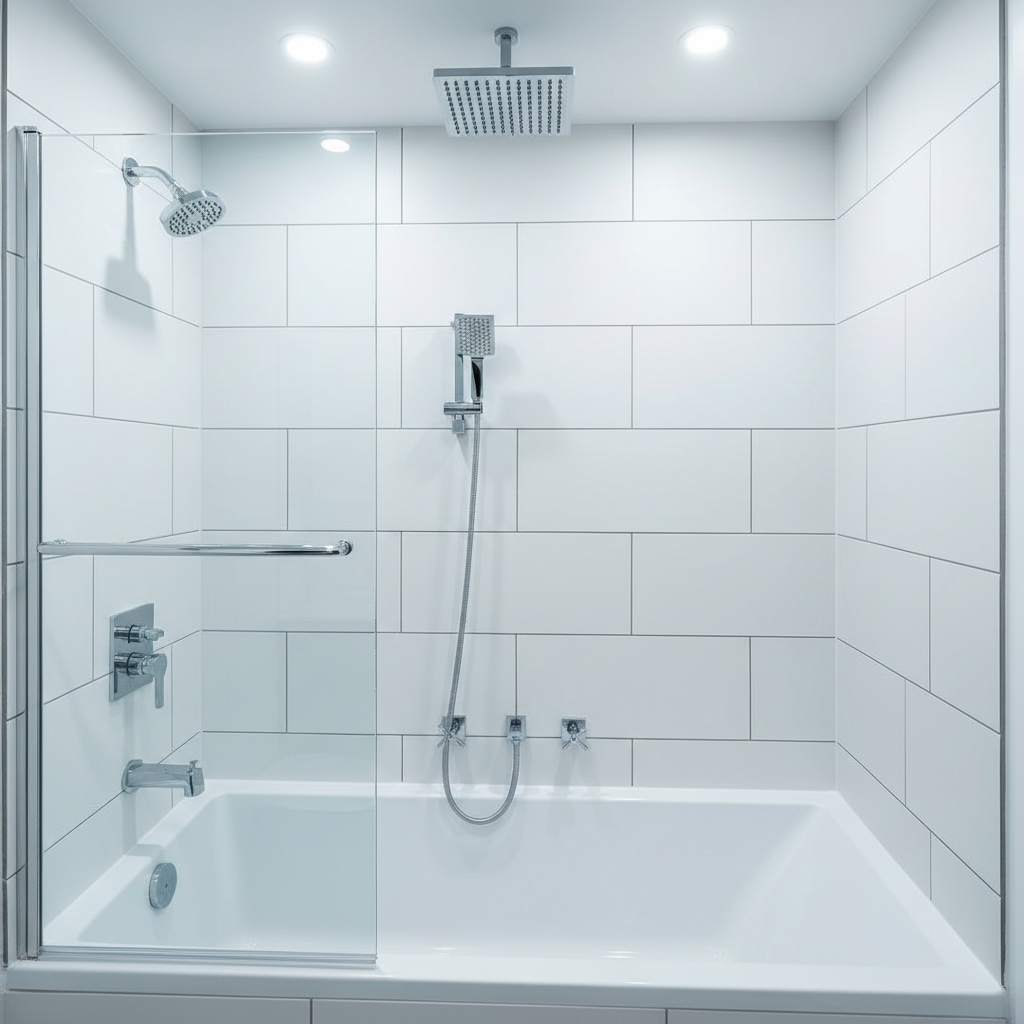
Common Components

// Components that must be inspected and evaluated:
  • Bathtub and decorative side panel
  • Shower and shower pan
  • Tub or shower valve
  • Shower head
  • Faucet, handles, and knobs
  • Drain and mechanical water stopper
  • Drain cover
  • Diverter valve(switches between tub and shower)
  • Glass door or enclosure

Real-World Example

// Scenario: Unit with only one bathroom fixture
Imagine a resident lives in a unit with only one bathtub/shower. During inspection:
  • The handle is broken and water won't turn on
  • The drain is completely blocked
⚠️ Critical Impact:
This is Def 1 Unit - Severe severity, 24-hour correction required, HCV Fail. The resident cannot bathe at all, which is a serious health and safety issue. This must be fixed immediately.

Sample Inspection Report

NSPIRE Physical Inspection Report

Sample official inspection report showing bathtub and shower deficiencies found during a typical HUD inspection.

U.S. DEPARTMENT OF HOUSING AND URBAN DEVELOPMENT

Real Estate Assessment Center (REAC)

NSPIRE Physical Inspection Report

Report ID: NSP-2024-084729

Date: January 15, 2024

Property Information

Property Name: Oakwood Gardens Apartments
Property ID: 123-456789
Address: 2847 Maple Street, Springfield, IL 62701
Program Type: Public Housing
Inspection Date: January 15, 2024
Inspector: Sarah M. Johnson, REAC #IN-8472

Inspection Summary

12
Units Inspected
8
Deficiencies
3
Severe
85.2
Score

Bathtub and Shower Deficiencies

UnitDeficiencyDescriptionSeverityCorrectionHCV
Unit 204Def 1Only bathtub in unit is inoperable. Hot water handle broken, water does not flow. Drain partially blocked, slow drainage observed.Severe24 hoursFail
Unit 312Def 2Master bathroom shower inoperable (no water flow). Guest bathroom shower operational. Both fixtures tested.Moderate30 daysFail
Unit 108Def 3Shower faucet handle missing. Water supply functional but cannot be controlled. Limits personal hygiene.Moderate30 daysFail
Unit 415Def 4Bathtub stopper mechanism inoperable. Does not limit hygiene. Drain functions properly when stopper removed.Low60 daysPass
Unit 201Def 5Shower enclosure missing privacy curtain. Window in bathroom lacks adequate covering. Visible from adjacent parking area.Moderate30 daysFail

Inspector Notes

All fixtures were tested with resident present. Water supply verified at each location. Drainage tested by running water for 30 seconds. Privacy assessment conducted from adjacent areas and exterior. Resident requested assistance with stopper in Unit 415, which was provided. All deficiencies documented with photographs (see attached).

This is a sample inspection report for demonstration purposes only.

Report generated in accordance with NSPIRE Standards V3.0 | HUD REAC Inspection Protocol