NSPIRE Standard: Cabinet and Storage (V3.0)

Cabinet and Storage Inspection Procedure

This guide outlines the inspection requirements for cabinets, drawers, and storage areas in kitchens, bathrooms, and laundry rooms. This standard ensures residents have adequate and functional storage space for food, sanitation supplies, and household items.

Download NSPIRE Standard PDF

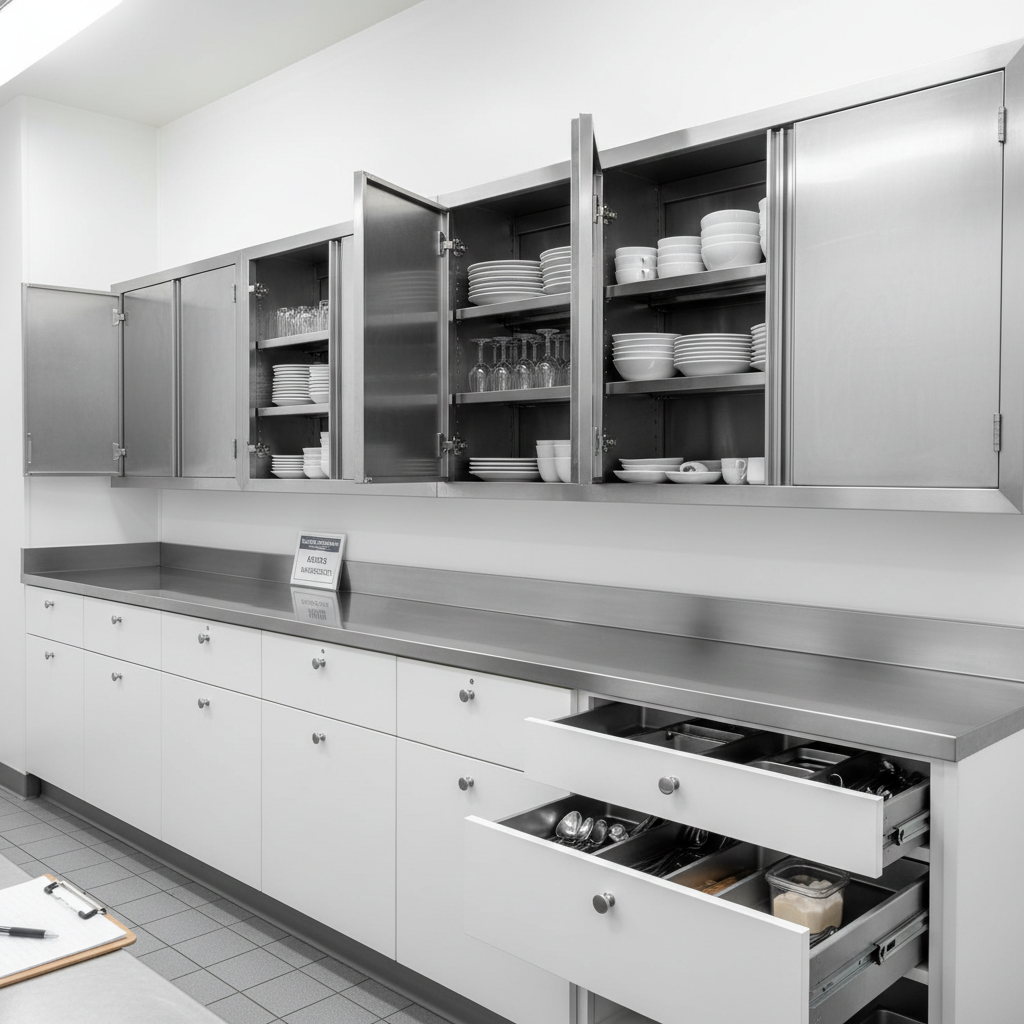
Professional kitchen showing cabinets and storage areas
Loading...

What This Standard Is About

Every home needs places to store things - food, cleaning supplies, personal items, and household goods. This standard ensures that cabinets, drawers, and shelves are present, functional, and in good condition. Think of it as making sure residents have proper places to organize and store their belongings safely and securely.

Where to Inspect

Cabinets and storage are checked in Unit kitchens, bathrooms, and laundry rooms, as well as Inside (common area) kitchens, bathrooms, and laundry rooms. These storage areas are never inspected in outside locations.

What You're Looking For

The inspector checks if storage components are:

  • Present - Is there adequate food storage space in the unit?
  • Functional - Do doors and drawers open and close properly?
  • Not Damaged - Are components in good condition?
  • Operable - Can residents actually use the storage space?

How the Inspection Works

// The inspection involves checking for storage space and testing all cabinet components
Step 1: Check for Food Storage Space (Unit Only)
In unit kitchens, visually determine if food storage space is present.
→ Note: Cold food storage (refrigerator) is evaluated under the Refrigerator standard
Step 2: Survey Storage Components
In kitchens, bathrooms, and laundry rooms, survey all storage components:
  • Cabinets with doors
  • Drawers
  • Shelves
  • Hardware (hinges, knobs, drawer guides)
Step 3: Count and Test Components
Count the total number of doors, drawers, and shelves in each room (kitchen, bathroom, laundry).
Attempt to open every drawer and door:
  • Open fully until stopped by hinges or slide tracks
  • For tracks without stops, open until you can see the back
  • Check if components are damaged, inoperable, or missing
Step 4: Calculate Percentage
Evaluate kitchen, bathroom, and laundry separately. Calculate the percentage of deficient components:
→ (Number of missing/damaged/inoperable components) ÷ (Total components) × 100
⚠️ Deficiency occurs if 50% or more of components are damaged, inoperable, or missing
Step 5: Evaluate Hardware and Mounting
Visually assess shelf mounting brackets and hardware. Check hinges, knobs, and drawer guides.
→ Hardware issues can make components inoperable even if they appear intact

What Happens If There's a Problem?

// Different deficiencies apply based on location (Unit vs Inside) and type of issue
Deficiency 1: No Food Storage Space (Unit Only)
Food storage space is not present in the unit kitchen. This is an Affirmative Habitability Requirement.
Location:Unit Only
Severity:Moderate
Correction Time:30 days
HCV Status:Fail
Deficiency 2: 50% or More Components Damaged/Inoperable/Missing
50% or more of kitchen, bathroom, or laundry cabinet doors, drawers, or shelves are damaged, inoperable, or missing.
Unit Location:Moderate30 daysHCV Fail
Inside Location:Low60 daysHCV Pass
→ Evaluate kitchen, bathroom, and laundry separately. Percentage calculated per room.
Why it matters:
Without adequate storage space, residents cannot properly store food, cleaning supplies, and personal items. This affects habitability and can lead to health and safety issues. Damaged or inoperable storage components limit residents' ability to organize their living space effectively.
Common Components

// Storage components that must be inspected and evaluated:
  • Doors(cabinet doors)
  • Drawers
  • Hinges(door mounting hardware)
  • Knobs(door and drawer handles)
  • Drawer guides or slides(drawer track mechanisms)
  • Shelves
  • Case or box(cabinet structure)
  • Shelf mounting brackets(hardware securing shelves)

Real-World Example

// Scenario: Kitchen with extensive storage damage
Imagine a unit kitchen with 10 total storage components (6 cabinet doors, 3 drawers, 1 shelf):
  • 3 cabinet doors won't close (broken hinges)
  • 2 drawers are completely missing
  • 1 shelf is broken and unusable
Calculation:
6 deficient components ÷ 10 total components = 60% deficient
⚠️ Critical Impact:
This is Def 2 Unit - 60% exceeds the 50% threshold. Moderate severity, 30-day correction required, HCV Fail. The resident cannot properly store food and household items, which affects habitability and daily living.

Sample Inspection Report

NSPIRE Physical Inspection Report

Sample official inspection report showing cabinet and storage deficiencies found during a typical HUD inspection.

U.S. DEPARTMENT OF HOUSING AND URBAN DEVELOPMENT

Real Estate Assessment Center (REAC)

NSPIRE Physical Inspection Report

Report ID: NSP-2024-103247

Date: March 12, 2024

Property Information

Property Name: Maplewood Apartments
Property ID: 789-456321
Address: 3421 Oak Avenue, Portland, OR 97201
Program Type: Public Housing
Inspection Date: March 12, 2024
Inspector: Jennifer L. Martinez, REAC #IN-7234

Inspection Summary

15
Units Inspected
6
Deficiencies
6
Moderate
91.2
Score

Cabinet and Storage Deficiencies

UnitDeficiencyDescriptionSeverityCorrectionHCV
Unit 305Def 1No food storage space present in kitchen. Kitchen lacks any cabinets, shelves, or dedicated storage area for food items. Only counter space available.Moderate30 daysFail
Unit 412Def 2Kitchen: 8 of 12 storage components deficient (67%). Three cabinet doors have broken hinges and won't close. Two drawers missing. One shelf broken. Two cabinet doors inoperable due to missing knobs.Moderate30 daysFail
Unit 208Def 2Bathroom: 3 of 5 storage components deficient (60%). Medicine cabinet door missing. Two drawer slides broken, drawers cannot open. Vanity cabinet door hinge damaged.Moderate30 daysFail
Unit 501Def 2Laundry: 2 of 3 storage components deficient (67%). Laundry room cabinet door missing. One shelf bracket broken, shelf unstable and unusable.Moderate30 daysFail
Common Area - Laundry RoomDef 2Inside: 4 of 7 storage components deficient (57%). Two cabinet doors inoperable. Two drawers missing slides. All components tested and documented.Low60 daysPass
Unit 127Def 2Kitchen: 6 of 10 storage components deficient (60%). Four cabinet doors have broken hinges. One drawer completely missing. One shelf bracket loose, shelf unstable. All tested during inspection.Moderate30 daysFail

Inspector Notes

All storage components tested by attempting to open every door and drawer. Kitchen, bathroom, and laundry rooms evaluated separately. Percentage calculations based on total components per room. Missing components counted as deficient. Inoperable components (doors/drawers that won't open or close) documented. Damaged hardware (hinges, knobs, slides) noted. Shelf mounting brackets visually assessed. All deficiencies documented with photographs showing component condition and operability issues. Property management notified of findings.

This is a sample inspection report for demonstration purposes only.

Report generated in accordance with NSPIRE Standards V3.0 | HUD REAC Inspection Protocol