NSPIRE Standard: Call-for-Aid System (V3.0)

Call-for-Aid System Inspection Procedure

This guide outlines the inspection requirements for emergency call-for-aid systems that allow residents to summon help during medical emergencies. These systems are critical life-safety features that must be accessible and functional at all times.

Download NSPIRE Standard PDF

Professional inspection showing call-for-aid system
Loading...

What This Standard Is About

Call-for-aid systems are emergency response devices that allow residents to summon help during medical emergencies. These systems can literally be life-saving, especially for elderly or disabled residents who may fall or experience a medical crisis. Think of it as an emergency button or pull cord that connects residents to help when they need it most.

Where to Inspect

Call-for-aid systems are checked in Unit bathrooms, bedrooms, and hallways, as well as Inside (common area) bathrooms and hallways. These systems are never inspected in outside locations. Note: Personal wireless call-for-aid systems (typically worn around the neck) are not inspected under this standard.

What You're Looking For

The inspector checks if call-for-aid systems are:

  • Accessible - Can residents reach the system? Is it blocked by furniture or other items?
  • Properly Positioned - If there's a pull cord, is it within 6 inches of the floor?
  • Functional - Does the system work when activated? Does it emit sound, light, or send signals?
  • Complete - Are all components present (pull cord if required, annunciator working)?

How the Inspection Works

// The inspection involves checking accessibility, positioning, and functionality of emergency systems
Step 1: Locate Call-for-Aid Systems
Look for call-for-aid systems along the walls in:
  • Bathrooms
  • Bedrooms (Unit only)
  • Hallways
  • Common areas (Inside only)
Step 2: Check for Obstructions
Visually inspect for any obstruction that would prevent a resident from accessing the system.
Common obstructions:
  • Furniture blocking access
  • Equipment or items in front of system
  • Clothes or towels hanging over system
  • Plants or decorations blocking access
⚠️ If system is blocked, this is Def 1 - Life-Threatening deficiency
Step 3: Check Pull Cord Height (If Present)
If the system has a pull cord, measure the distance between the end of the pull cord and the floor.
⚠️ Pull cord must be 6 inches or less from the floor. If higher than 6 inches, this is Def 1.
→ Note: If system is button-only (no cord), skip this step
Step 4: Test System Functionality
Before testing, ask POA if system is monitored onsite or offsite:
  • If monitored offsite: Do not test functionality
  • If monitored onsite: Request POA to station staff at annunciator panel
Test the system by pulling the pull cord from its lowest hanging point (or pressing button if button-only).
Verify:
  • System emits audible alarm (if so designed)
  • System emits visual alarm/flashing light (if so designed)
  • Annunciator panel indicates correct corresponding room
Step 5: Check for Missing or Tied-Up Components
Verify that pull cord is present (if system is designed to have one) and not tied up in a way that prevents engagement.
⚠️ Missing pull cord or tied-up cord = Def 2 - Life-Threatening deficiency

What Happens If There's a Problem?

// Both deficiencies are Life-Threatening - these are the most severe category
Deficiency 1: System Blocked or Pull Cord Too High
The call-for-aid system is blocked by furniture, equipment, or other items, OR the pull cord end is higher than 6 inches off the floor.
Location:Unit or Inside
Severity:Life-Threatening(presents a high risk of death to resident)
Correction Time:24 hours
HCV Status:Fail
HCV Correction:24 hours
Deficiency 2: System Does Not Function Properly
The call-for-aid system does not emit sound or light, does not send signal to annunciator, annunciator shows wrong room, pull cord is missing, or pull cord is tied up and cannot be engaged.
Location:Unit or Inside
Severity:Life-Threatening(presents a high risk of death to resident)
Correction Time:24 hours
HCV Status:Fail
HCV Correction:24 hours
⚠️ Critical Safety Issue:
Call-for-aid systems are life-safety features. If a resident falls or has a medical emergency and cannot reach the phone, this system is their only way to get help. That's why both deficiencies are Life-Threatening and require 24-hour correction. Every hour of delay could be the difference between life and death.
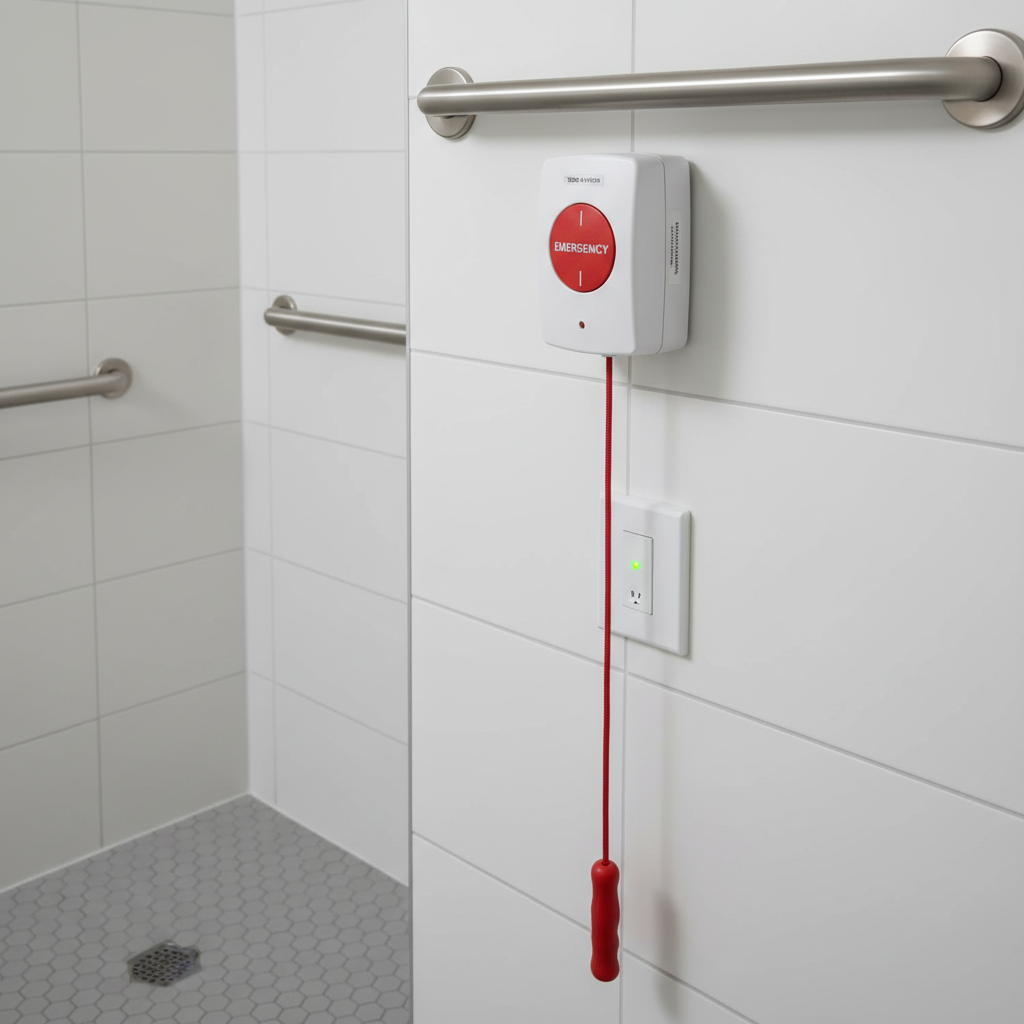
Common Components

// Call-for-aid system components that must be inspected and functional:
  • Annunciator(central panel that receives and displays alerts)
  • Pull cord(must be within 6 inches of floor if present)
  • Speaker(for audible alarms)
  • Lights(visual indicators/flashing alarms)
  • Alarm(audible alert system)
  • Faceplate(system housing/cover)
  • Button(for button-only systems, no pull cord required)

Real-World Example

// Scenario: Resident falls in bathroom and cannot reach call-for-aid system
Imagine an elderly resident falls in the bathroom and cannot get up. They need to activate the call-for-aid system to get help, but:
  • The pull cord is tied up in a knot, 18 inches off the floor
  • A laundry basket is blocking access to the system
  • When they manage to pull it, no alarm sounds and annunciator doesn't activate
⚠️ Critical Impact:
This is Def 1 and Def 2 - Life-Threatening, 24-hour correction required, HCV Fail. The resident cannot summon help during a medical emergency. If they're injured, bleeding, or having a heart attack, they may not be able to reach a phone. This system is their lifeline, and it must work. Every minute counts in an emergency.

Sample Inspection Report

NSPIRE Physical Inspection Report

Sample official inspection report showing call-for-aid system deficiencies found during a typical HUD inspection.

U.S. DEPARTMENT OF HOUSING AND URBAN DEVELOPMENT

Real Estate Assessment Center (REAC)

NSPIRE Physical Inspection Report

Report ID: NSP-2024-114582

Date: April 3, 2024

Property Information

Property Name: Sunset Manor Senior Living
Property ID: 234-567890
Address: 5678 Sunset Boulevard, Phoenix, AZ 85001
Program Type: Public Housing
Inspection Date: April 3, 2024
Inspector: Robert T. Williams, REAC #IN-4567

Inspection Summary

20
Units Inspected
7
Deficiencies
7
Life-Threatening
87.8
Score

Call-for-Aid System Deficiencies

LocationDeficiencyDescriptionSeverityCorrectionHCV
Unit 105 - BathroomDef 1Pull cord end measured at 14 inches from floor. Cord tied in knot, preventing proper engagement. System accessible but cord height exceeds 6-inch requirement.Life-Threatening24 hoursFail
Unit 212 - BathroomDef 1Call-for-aid system blocked by large laundry basket placed directly in front of wall-mounted unit. Resident cannot access system from floor level.Life-Threatening24 hoursFail
Unit 308 - BedroomDef 2Pull cord missing from call-for-aid system. System designed to have pull cord but only faceplate and button present. No cord attached to system.Life-Threatening24 hoursFail
Unit 415 - BathroomDef 2System tested: Pull cord activated but no audible alarm emitted. No visual alarm/flashing light observed. Annunciator panel did not receive signal. System completely non-functional.Life-Threatening24 hoursFail
Unit 502 - HallwayDef 2Pull cord tied up in multiple knots, preventing engagement. Cord cannot be pulled from lowest hanging point. System appears intact but cord rendered inoperable.Life-Threatening24 hoursFail
Common Area - First Floor HallwayDef 2System tested: Alarm activated but annunciator panel displayed incorrect room location. System showed "Unit 201" when activated from first floor hallway. Signal routing malfunction.Life-Threatening24 hoursFail
Unit 127 - BathroomDef 1Pull cord end measured at 9 inches from floor. Exceeds 6-inch maximum requirement. System not accessible from floor level as required for emergency situations.Life-Threatening24 hoursFail

Inspector Notes

All call-for-aid systems located and visually inspected. Pull cord heights measured using standard measuring tape. Systems tested with POA staff stationed at annunciator panel. All systems confirmed as monitored onsite. Third-party inspection documentation reviewed where available. All obstructions documented with photographs. Functional testing conducted per protocol. Annunciator panel verified for correct room identification. All deficiencies documented with photographs showing cord height, obstructions, and system condition. Property management immediately notified of all Life-Threatening deficiencies requiring 24-hour correction.

This is a sample inspection report for demonstration purposes only.

Report generated in accordance with NSPIRE Standards V3.0 | HUD REAC Inspection Protocol